
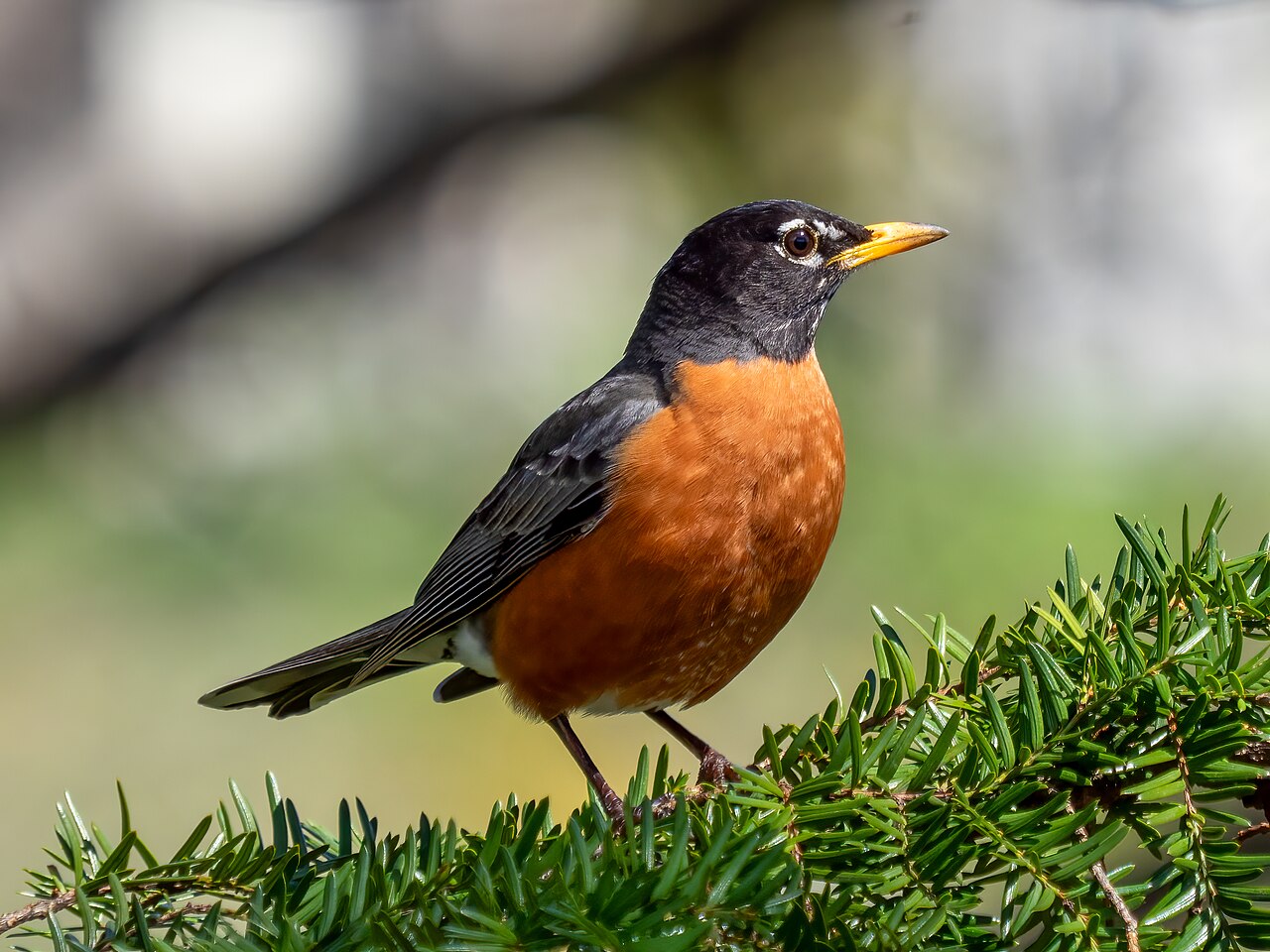
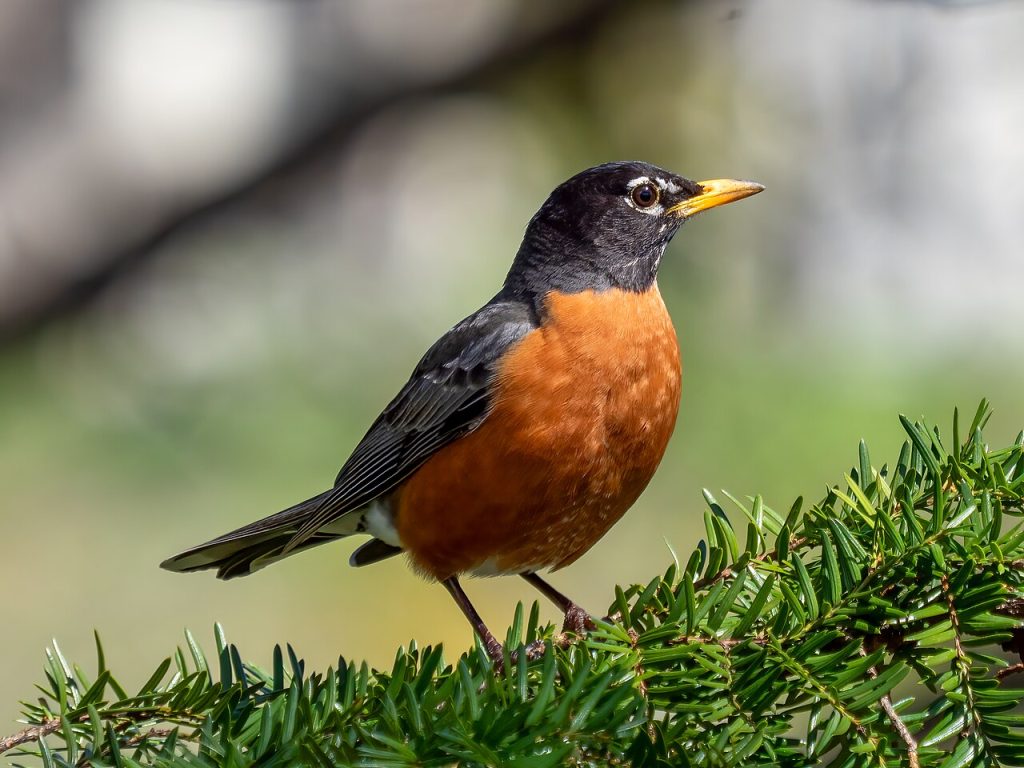
Let’s start with the basics—how to identify it. Males are really easy to recognize. Their heads are almost black, with bright yellow beaks and a large patch of orange to reddish-orange on their chest and belly—like they’re wearing a little vest. They also have a white ring around each eye and some dark streaking on their throat. Females are duller and grayer overall, but that orange chest is still obvious, so you won’t mistake them. Juveniles are even more fun to spot—their chests aren’t solid-colored but have spots, so they look less “clean” than the adults.
Size-wise, they’re about 8 to 11 inches long, with a wingspan of 12 to 16 inches. Among all the thrush species in North America, this is the biggest one. A good rule of thumb: noticeably bigger than a bluebird, but smaller than a crow—that’s about right.
And their numbers? Mind-blowing. The U.S. population is estimated at around 370 million, making it one of the most numerous landbirds in North America. You’ll find them everywhere—from the wilds of Alaska to New York’s Central Park, from your front lawn to mountain forests at 12,000 feet. It’s one of those birds that’s almost impossible to avoid.